
When businesses think about improving their website, they often focus on visual design, content, or SEO. While those elements are important, many overlook one of the most critical foundations of a successful website: site architecture.
Website architecture is the structure that organizes your pages, content, navigation, and internal links. It determines how visitors move through your website and how search engines understand your content. A well-planned structure improves both website user experience and SEO performance, while a poorly organized site can make even the best content difficult to find.
Whether you’re working with web design Calgary professionals, managing your own website, or planning a redesign, understanding website architecture is essential for long-term growth.
What Is Website Architecture?
Website architecture refers to how your web pages are organized and connected. Think of it like a blueprint for a building. Every room has a purpose, and every hallway helps people move efficiently between spaces.
Your website works the same way.
Visitors should be able to find any important page quickly and intuitively. Search engines should be able to crawl and understand your content without confusion.
Strong architecture helps:
- Improve SEO performance
- Increase engagement
- Improve crawlability
- Support conversions
- Create an easy to navigate experience
- Help users find information quickly
- improve user experience
For both users and search engines, structure matters.
Why Structure Matters for User Experience
Imagine walking into a store where products are randomly placed, signs are missing, and staff can’t tell you where anything is.
Most customers would leave.
The same thing happens online.
When website users can’t find information quickly, they become frustrated and abandon the site. High-quality, user-friendly designs paired with proper page layout can help to avoid bad bounce rate.
A strong architecture creates a smoother user experience ux by making navigation predictable and intuitive.
Visitors should never have to wonder:
- Where am I?
- Where do I go next?
- How do I find this service?
- How do I contact this company?
The easier it is for users to navigate, the longer they stay engaged.
This directly contributes to better conversion rates, stronger engagement signals, and improved SEO performance.
The Relationship Between SEO and Site Heirarchy
Search engines rely on structure to understand your website.
Google doesn’t view your site the same way humans do. Instead, it follows links between pages to determine:
- Which pages are important
- How topics relate to one another
- Which pages should rank for specific keywords
A well-organized site architecture makes it easier for search engines to crawl and index your content.
When pages are buried deep within the site or disconnected from important navigation paths, they often receive less authority and visibility.
This is why architecture is a foundational component of SEO.
The Homepage Should Lead Users Everywhere
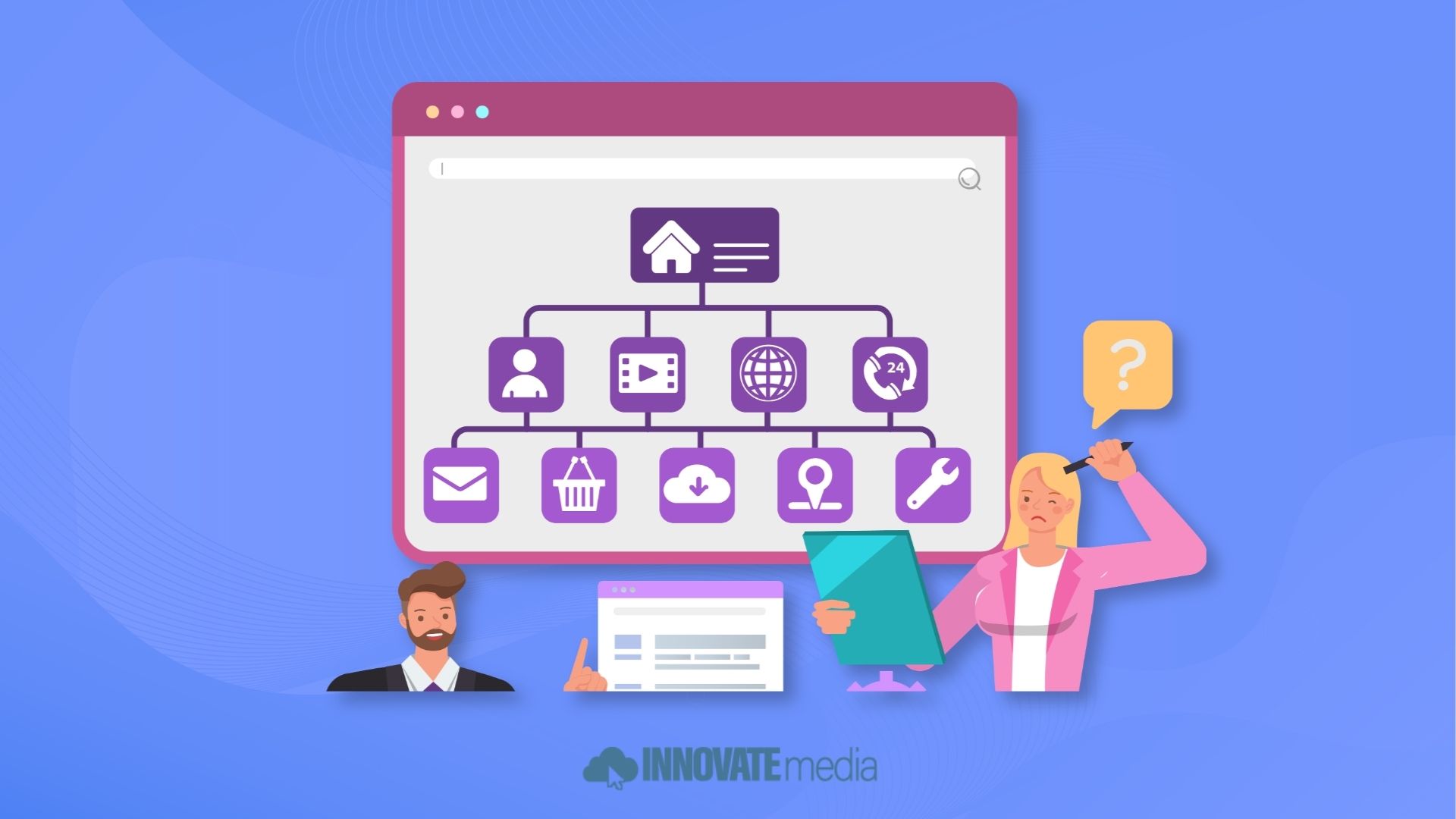
Your homepage acts as the central hub of your website.
Many businesses make the mistake of treating the homepage like a digital brochure rather than a navigation tool.
A strong homepage should:
- Introduce the company
- Establish credibility
- Highlight primary services
- Direct users toward important pages
- Support key calls to action
Most importantly, it should link clearly to major service categories.
For example, a contractor website might have homepage links to:
- Roofing
- Siding
- Windows
- Exterior Renovations
These become the parent service pages that organize the rest of the website.
Parent Services and Sub-Service Pages
One of the most effective structures for both SEO and UX is a parent-child service hierarchy.
Instead of creating one large service page that tries to rank for everything, businesses should organize services into categories.
For example:
Parent Service
Roofing Services
Sub-Service Pages
- Roof Repair
- Roof Replacement
- Emergency Roofing
- Asphalt Shingle Roofing
- Commercial Roofing
This structure creates clear topical relationships.
Visitors immediately understand how services are connected.
Search engines gain a stronger understanding of the business’s expertise.
This architecture also allows each page to target specific keywords and search intent without creating overlap.
Avoiding Keyword Cannibalization
One of the biggest SEO issues businesses encounter is keyword cannibalization.
This happens when multiple pages compete for the same keyword.
Instead of strengthening rankings, the pages divide authority between themselves.
Proper architecture helps prevent this issue.
For example:
Bad Structure:
- Roofing Page
- Roofing Services Page
- Roofing Calgary Page
- Calgary Roofing Company Page
All targeting similar keywords.
Better Structure:
Parent Page:
- Roofing Services
Supporting Pages:
- Roof Repair
- Roof Replacement
- Commercial Roofing
Each page serves a distinct purpose.
This makes it easier for Google to understand which page should rank for each query.

Why Every Important Page Should Be Within Two Clicks
A common rule among Calgary web developers is the “two-click rule.”
Users should be able to reach important information within two clicks from the homepage.
For example:
Homepage → Roofing Services → Roof Repair
That’s it.
Simple.
The deeper a page is buried, the less likely users are to find it.
Search engines also tend to prioritize pages that are easier to access through internal links.
While not every page must literally be two clicks away, important revenue-generating pages should be easy to reach.
This improves both SEO and website user experience.
Navigation Menus Matter More Than You Think
Your menu is one of the most important pieces of architecture.
Unfortunately, many websites overload navigation with too many options.
Good menus focus on clarity.
Visitors should instantly understand:
- Services offered
- Locations served
- How to contact you
- Where to find additional resources
Professional local website designers often build navigation around user intent rather than company structure.
Users don’t care how your company is organized internally.
They care about finding solutions quickly.
Why Related Blog Content Supports Service Pages
Blogs aren’t just for generating traffic.
They also strengthen architecture.
One of the most effective SEO strategies is connecting blogs directly to related services.
Example:
Service Page:
- Furnace Repair
Related Blogs:
- Why Is My Furnace Making Noise?
- Signs Your Furnace Needs Replacement
- How Often Should You Service Your Furnace?
These supporting articles reinforce topical authority while helping users continue their journey.
This internal linking structure creates a content ecosystem that benefits both SEO and engagement.
Internal Linking Builds Authority
Internal links are the roads connecting your website.
Without them, pages become isolated.
Strong internal linking helps:
- Distribute authority
- Improve crawlability
- Increase page views
- Extend user sessions
- Improve rankings
For example:
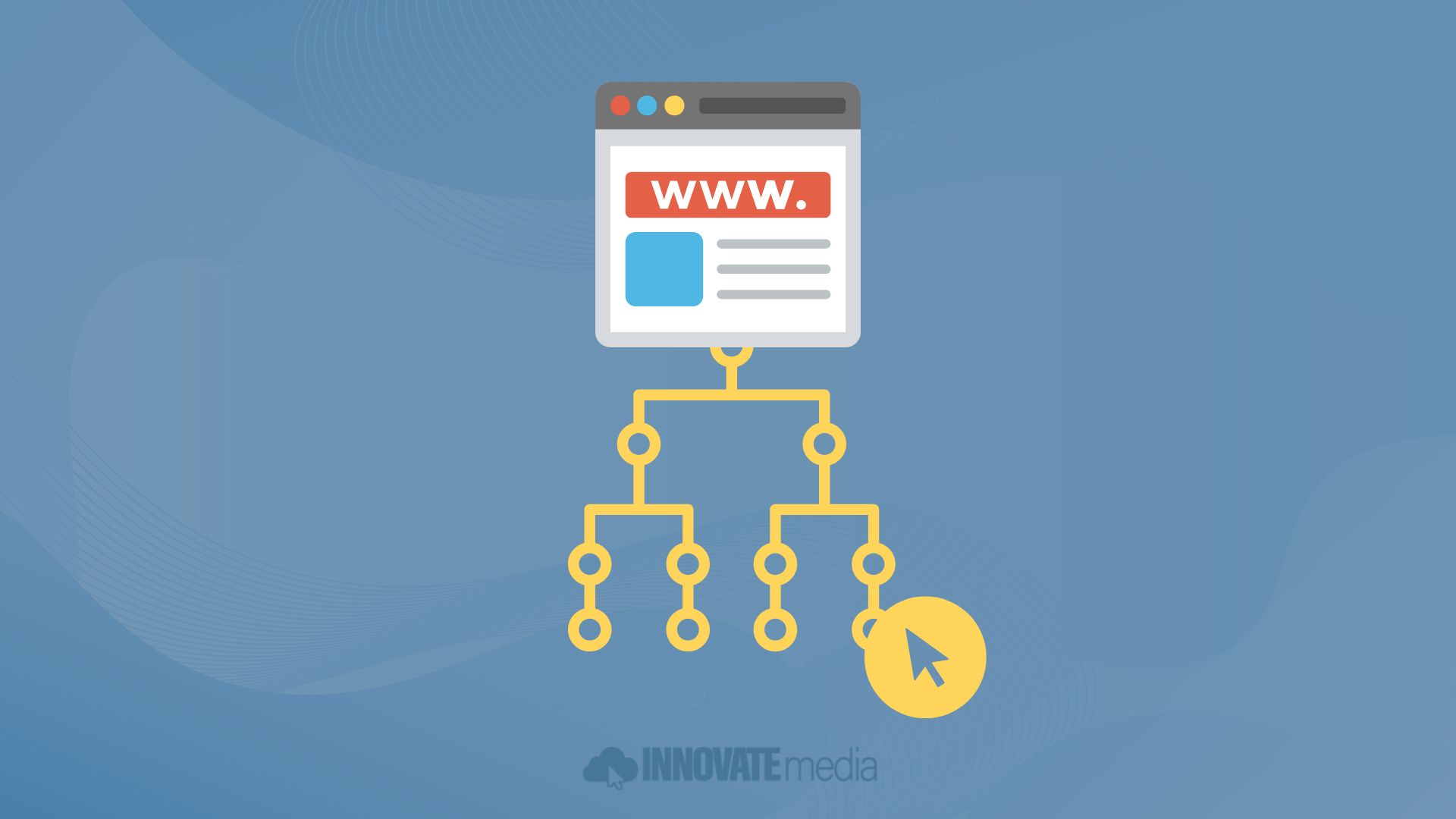
Homepage
→ Service Page
→ Sub-Service Page
→ Related Blog
Each connection strengthens the overall architecture.
This creates a logical path for both users and search engines.
User Research Helps Shape Better Architecture
The best-performing websites rely on:
- User research
- User testing
- Analytics reviews
- Heatmaps
- Customer feedback
These insights reveal how users actually behave.
Often, businesses assume visitors navigate one way, but the data shows something completely different.
Understanding how users interact with your website helps create a more intuitive structure.
Responsive Design Matters Too
Modern websites must perform equally well across phones, tablets, and desktops.
A strong responsive design ensures navigation, menus, and service structures remain easy to use regardless of screen size.
This is especially important because most traffic now comes from mobile devices.
Good architecture should feel natural on every device.
Supporting Business Goals Through Structure
Every page on your website should support specific business goals.
That means architecture should be planned around outcomes.
Examples include:
- Generating leads
- Increasing phone calls
- Booking appointments
- Selling products
- Building authority
When structure aligns with objectives, users naturally move toward conversions.
This is where architecture becomes much more than a technical exercise—it becomes a business growth strategy.
How Calgary Businesses Can Benefit from Organized Pages
Many businesses invest heavily in graphic design, SEO, and advertising while overlooking the structure underneath.
Yet architecture often determines whether those investments succeed.
For companies seeking web design services, architecture should be discussed before visual design begins.
The most successful websites start with:
- Clear service hierarchies
- Strong internal linking
- Logical navigation
- Supporting blog content
- Strategic calls to action
These elements work together to create a more effective and scalable website.
Why the Site Map Is the Foundation of Long-Term Growth
A beautiful website may attract attention, but architecture determines how effectively it performs.
When visitors can quickly find services, understand your offerings, and move naturally through the website, engagement improves.
When search engines can easily crawl and understand your content, rankings improve. The best websites balance SEO, usability, and conversion strategy through thoughtful architecture.
At Innovate Media, our team of Calgary web developers and local website designers build websites with architecture at the forefront. We focus on creating organized service structures, strategic internal linking, and intuitive navigation systems that support both SEO and real business growth.
By combining strong architecture with quality content and modern design principles, we help businesses create websites that are easier to use, easier to rank, and built for long-term success.
Frequently Asked Questions
What is site architecture?
Site architecture is the structure and organization of your website, including how pages connect through navigation and internal links.
Why is site Heirarchy important for SEO?
A strong architecture helps search engines crawl, understand, and rank your content more effectively.
How many clicks should it take to reach a service page?
Ideally, important service pages should be reachable within two clicks from the homepage.
What is a parent service page?
A parent service page is a main service category that links to more detailed sub-service pages underneath it.
How do blogs help website architecture?
Related blogs support service pages through internal linking and help build topical authority around important subjects.
Does structure affect user experience?
Yes. A well-organized structure makes websites easier to navigate, improving engagement and conversions.
Should service pages link to each other?
When relevant, yes. Strategic internal linking helps users find additional information and strengthens SEO.